

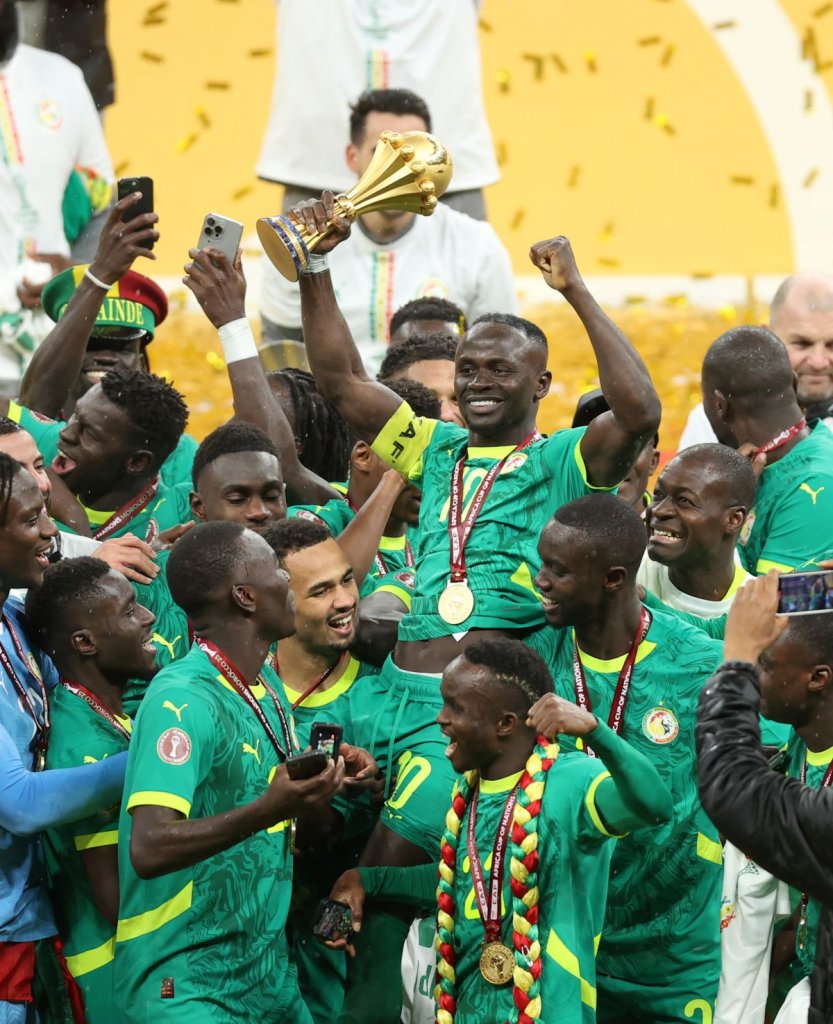
The Senegalese Football Federation (FSF) has formally appealed against the Confederation of African Football (CAF) ‘s decision to strip them of the 2026 AFCON title and award it to Morocco.


Confirming the development, CAS said in a statement: “The Court of Arbitration for Sport (CAS) confirms receipt of an appeal by the Senegalese Football Federation (FSF) against the Confederation of African Football (CAF) and the Royal Moroccan Football Federation.”
CAS added that Senegal’s appeal “seeks to set aside the CAF decision and declare the FSF winners of AFCON”, setting the stage for a legal process that will determine the official outcome of the tournament.
At the heart of the dispute is a dramatic final in Rabat on January 18. Senegal had originally secured a 1-0 victory after extra time, but the match was overshadowed by a controversial stoppage-time penalty awarded to the hosts. In protest, Senegal’s players left the pitch for around 15 minutes before eventually returning to resume play. The penalty, taken by Brahim Diaz, was saved, and Senegal went on to win through an extra-time strike.
However, CAF’s appeal board later ruled that the walkoff constituted a breach of tournament regulations. Citing provisions that deem any team leaving the field without the referee’s permission to have forfeited the match, CAF overturned the result, awarding Morocco a 3-0 victory and the title – ending the hosts’ 49-year wait for continental glory.
Senegal’s appeal to CAS seeks to have that ruling annulled and their victory reinstated. The FSF has also requested procedural concessions, including a suspension of deadlines until CAF provides full written grounds for its decision. Under CAS rules, Senegal have 20 days to submit their legal arguments once proceedings are fully underway, with CAF then granted a further 20 days to respond.
Read: Patrice Motsepe Addresses AFCON Final Chaos, Defends CAF’s Integrity
CAS director general Matthieu Reeb acknowledged the anticipation surrounding the case, stating: “We understand that teams and fans are eager to know the final decision, and we will ensure that arbitration proceedings are conducted as swiftly as possible, while respecting the right of all parties to a fair hearing.” However, the tribunal has indicated that due to the complexity of the process, it is not yet possible to provide a clear timeline for when a hearing will take place or a verdict will be reached.
The controversy has sparked fierce reaction in Senegal, where officials have condemned CAF’s decision as unjust and damaging to the integrity of the sport. Government representatives described the ruling as contradictory to the principles of sporting ethics, while the federation labelled it “iniquitous, unprecedented and unacceptable.”
Morocco, meanwhile, has maintained that its appeal was never intended to undermine Senegal’s on-field performance but rather to ensure adherence to competition regulations. The Royal Moroccan Football Federation welcomed CAF’s ruling as a necessary step in upholding the rules governing international tournaments.