

Football has a cruel way of testing even its brightest talents. One moment you are the golden boy, knocking on the door of the national team, and the next you are walking off the pitch in tears, weighed down by missed chances and the roar — or silence — of disappointed supporters.


That is the storm Mduduzi Shabalala currently finds himself navigating at Kaizer Chiefs.
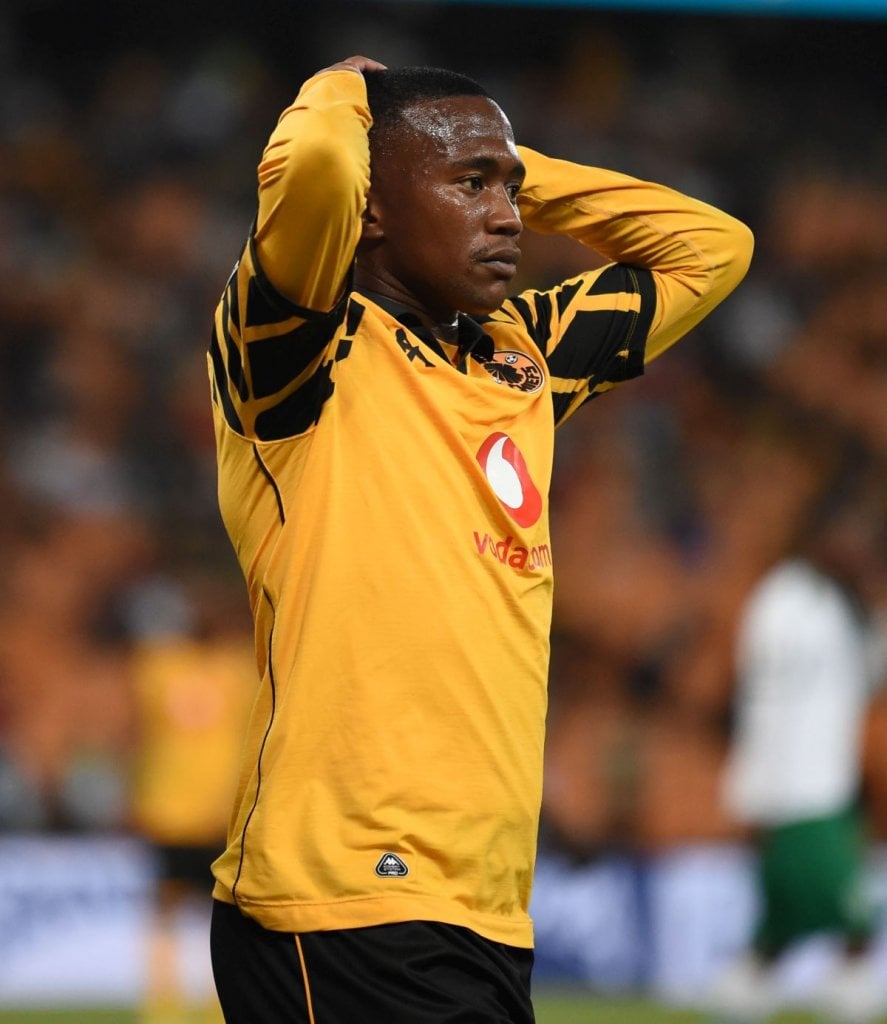
Following Amakhosi’s painful Nedbank Cup exit to Stellenbosch FC, the spotlight turned sharply onto the young attacker. Shabalala endured a difficult afternoon in front of goal, missing several clear-cut opportunities that could have altered the outcome.
At one point during the match, the Chiefs youth graduate was visibly emotional — a raw, human moment that captured the magnitude of the pressure he is under.
But if there is anyone who understands how quickly confidence can be shaken at Naturena, it is Itumeleng Khune.
The Chiefs legend has drawn parallels between Shabalala’s situation and that of former striker Kingston Nkatha, a player who once faced intense scrutiny from his own supporters.
Nkatha, the Zimbabwean forward, often found himself criticised and even booed for perceived wastefulness in front of goal. The weight of expectation took its toll, denting his confidence and affecting his performances.
At the time, Khune was not just the club captain; he was a leader in the truest sense.
As criticism mounted, Khune stepped in, calming tensions and offering Nkatha the support he desperately needed. It was an intervention that spoke volumes about dressing-room unity and leadership.
Now, years later, Khune sees history echoing itself.
“The supporters must continue to rally behind the players because there is no player who goes on the field to make mistakes or to cost the team,” Khune said on Tuesday while addressing journalists at a club and sponsorship event.
His message was clear: mistakes are part of football, but isolation should not be.
Khune was quick to remind critics that Shabalala’s recent struggles should not erase the body of work that has made him one of Chiefs’ standout performers this season.
“Mdu Shabalala has done tremendously well for himself and the club. He has been the one [Kaizer Chiefs] player who has been knocking on that Bafana Bafana door, and the supporters must keep being patient with him,” he added.
Indeed, before this setback, Shabalala had emerged as a beacon of hope in an inconsistent Chiefs campaign, energetic, creative, and fearless. His movement off the ball remains intelligent, his ability to find dangerous spaces impressive for a player of his age.
What deserted him against Stellenbosch was not effort or intent, but composure in decisive moments. Khune believes this is precisely where senior figures must step in.
“He reminds me of Kingston Nkatha’s situation, where, as a captain, I had to intervene and calm the fans down,” Khune reflected.
“We need that kind of leadership in today’s generation. They need to come together as players and fight for each other because Mdu is making good runs, he is creating chances, he finds himself in good scoring positions.”
Read: Mduduzi Shabalala praised for his dedication at Kaizer Chiefs after 100th appearance
For Khune, the fundamentals are still there. The runs. The positioning. The instinct to arrive in goal-scoring areas. Those are not signs of a player lost; rather, they are signs of one on the brink of rediscovering his sharpness.
But confidence, especially in young players, is fragile.
“He must not drop the ball. He must continue fighting for the club because he has been doing very well,” Khune insisted.
The message is as much to the dressing room as it is to the stands. Chiefs is a club built on unity, resilience and belief, values that have carried it through turbulent periods before.
Shabalala’s tears were a reminder that beneath the badge and expectations stands a young footballer who cares deeply.
If history has taught Chiefs anything, it is that patience and leadership can turn adversity into redemption.
Now, as the pressure mounts once again at Naturena, the question is not whether Shabalala has the talent.
It is whether those around him will provide the shield he needs to flourish again.